Clan MacLellan: Kirkcudbright, Dumfries & Galloway

Clan MacLellan / McLellan, a Lowland Scottish clan rooted in Dumfries and Galloway, has a history marked by political intrigue, royal service, and feuds with powerful neighbours!
The clan’s name derives from the Gaelic “Mac-a-ghille-dhiolan,
“Meaning “son of the bastard“.
Origins and Early History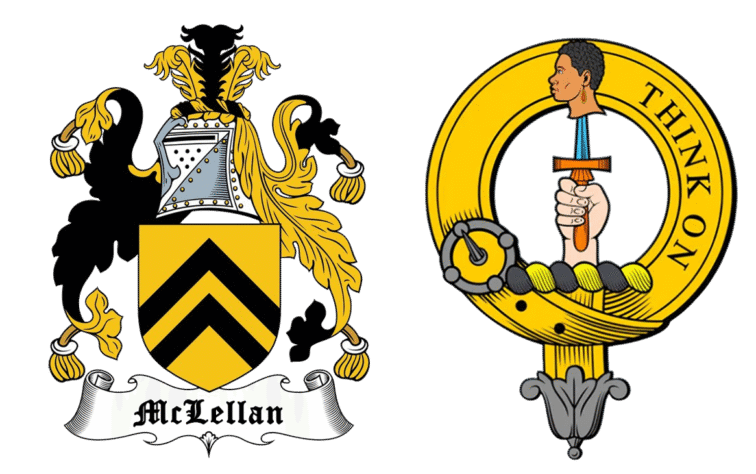
Before crowns were contested and swords were drawn, the name MacLellan echoed through the rugged lands of Galloway — a region known not for submission, but for independent fire and tribal loyalty. The roots of the clan lie not in royal halls, but in the rough-hewn soil of the western Lowlands, where bloodlines were currency and honour was earned, not inherited.
The earliest known patriarch, Cane McGillolane, rode as a knight under John Balliol, the ill-fated king Scotland raised and rejected in equal measure. Yet Cane’s blood carried more than just loyalty — it bore noble illegitimacy, being the son of Thomas of Galloway, himself the natural-born son of Alan of Galloway, one of the most powerful lords of medieval Scotland.
From this tangled lineage of lords and outlaws emerged the MacLellan name — bold, defiant, and destined to play both defender and dissenter in Scotland’s violent theatre of kings. The very name MacLellan (Gaelic: MacGille Fhaolain) speaks volumes: “son of the servant of St Filan.” But this was no servant of man — St Filan, a warrior-monk of the Celtic church, was revered for his wisdom, prophecy, and power.
His name, Filan, born from the word faelchu — “wolf” — casts the clan not just as followers of faith, but as guardians of the old strength, wild and unyielding. It is no accident the wolf runs beneath their name — for the MacLellans endured, adapted, and struck when cornered, just as the lone wolf would.
By 1217, the name was already etched in royal record, when Duncan MacLellan appeared in a charter issued by King Alexander II. They were not minor vassals — they were stakeholders in the sovereignty of Galloway, shaping its fate with sword and signature alike. Their dominion was such that the village of Balmaclellan, nestled in the Stewartry of Kirkcudbright, still carries their name — a living monument to a clan that stood rooted in land, faith, and defiance.
Yet power breeds enemies. Their early support for the Balliol claim to the Scottish throne would later place them squarely against Robert the Bruce — and more dangerously, against the black-hearted ambitions of Clan Douglas. What began as loyalty would turn into centuries of blood feud and survival, forging a clan tempered by hardship and hardened by betrayal.
The story of Clan MacLellan is not one of castles and coronets — it is one of lineage carved through resistance, of names that refused to be forgotten.
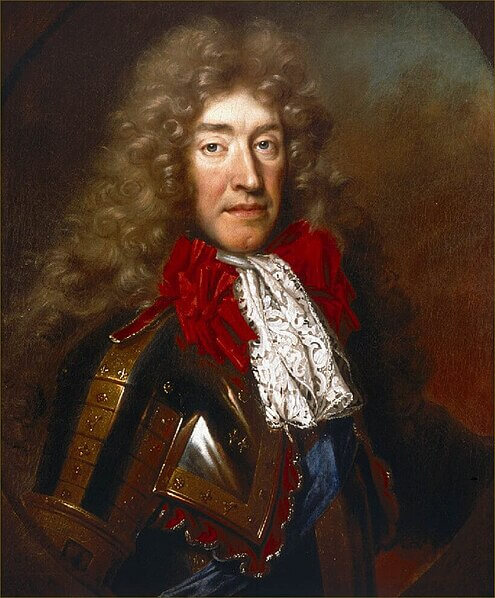
King James II of England
From the chapel shadows of St Filan to the blood-soaked crossroads of royal intrigue, the MacLellans stood not as pawns — but as a force that bent to no crown, unless it earned their
respect. Today, Clan MacLellan is armigerous (lacking a chief) but remains a historically significant Lowland clan with strong ties to Kirkcudbrightshire, royal service, and turbulent frontier justice.
Feuds and Royal Service
The 15th century marked a brutal turning point in the legacy of Clan MacLellan. When Sir Patrick MacLellan, Sheriff of Galloway, refused to betray the Crown by joining the Douglas rebellion against King James II, he paid the ultimate price. The 8th Earl of Douglas, blinded by power and fury, seized Sir Patrick and executed him without trial within the cold walls of Threave Castle. It was not just murder — it was a warning to all who dared stand loyal to the king.
But the MacLellans did not forget.
Sir Patrick’s son, William MacLellan, turned vengeance into honour. When a notorious Moorish bandit terrorized the region, it was William who hunted him down. And when the blade fell, William did not just bring justice — he carried the severed head impaled on his sword, and laid it before the king.
“Think on.”
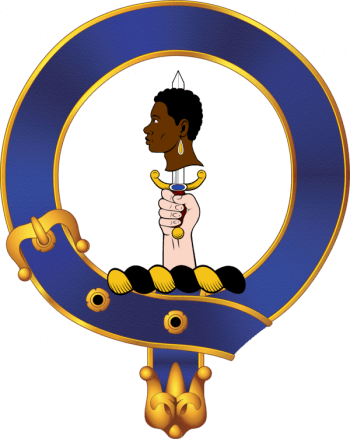
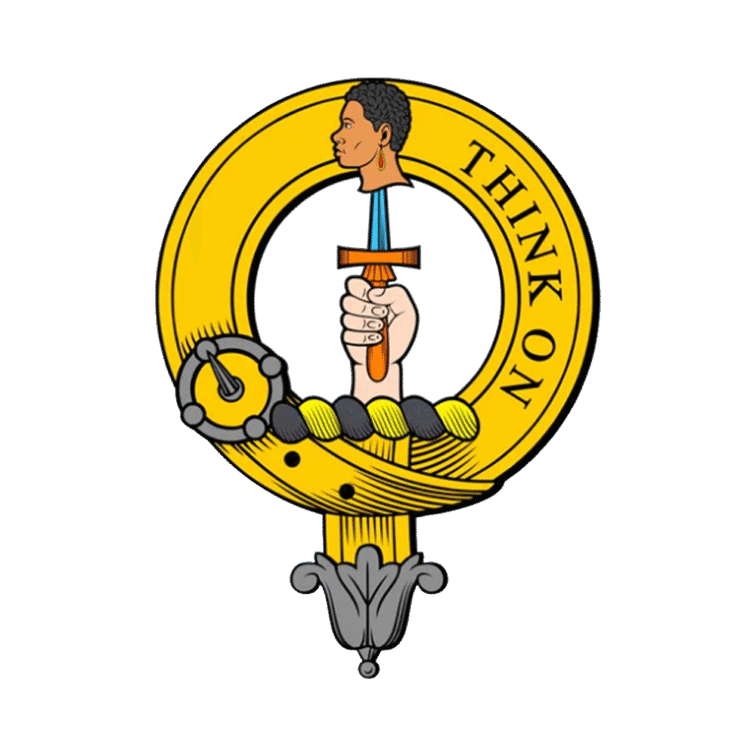
Clan MacLellan: Offical Family Crest
Those were the words William is said to have spoken to King James II — a reminder of his father’s sacrifice, his own defiance, and the price of loyalty. The act was immortalised in the MacLellan clan crest: a Moor’s head on a sword point, symbol of courage, vengeance, and unwavering service to the Crown.
What the Douglases began in betrayal, the MacLellans answered with blood, steel, and legacy.
Rise and Decline
Loyalty to the Crown did not go unrewarded. In 1633, the MacLellan name reached the heights of noble recognition when Sir Robert MacLellan was granted the title Lord Kirkcudbright by King Charles I. The clan, once at odds with barons and brigands, now stood among Scotland’s aristocracy — a reward not just for their service, but for their endurance through generations of upheaval.
But nobility came with cost.
When civil war swept across the kingdom, the MacLellans stood with the Royalists, fighting for the king in a nation fracturing from within. Honour, once their strength, became their downfall. As the tides turned against the Crown, the MacLellans were punished not by sword — but by silence, exile, and ruin.
By the late 17th century, the once-proud estates were lost to debt, sold piece by piece as the clan’s political star faded. The title of Lord Kirkcudbright became dormant after the death of the 9th Lord in 1832 — not erased, but sleeping, like the embers of a once-great fire.
The name MacLellan never vanished. It waits — as all true bloodlines do — for the time to rise again.
Robert the Bruce & Clan MacLellan
When the fires of rebellion reignited under Robert the Bruce, Scotland was torn — not just by war, but by the weight of choosing a side. Many watched. Some wavered. But the MacLellans — seasoned by betrayal and sharpened by the Wallace cause — made their choice with caution, and with conviction.
At first, their loyalty lay with John Balliol, the rightful king by blood and law — a choice that set them against Bruce in the early days of the Wars of Independence. It was not cowardice, but principle. The MacLellans followed oaths they believed just.
But when Balliol faltered, and Bruce proved his mettle not by title, but by fire, the MacLellans adapted — not to survive, but to win Scotland’s freedom.
They didn’t flip allegiance. They evolved with the fight. And their loyalty would not go unnoticed.
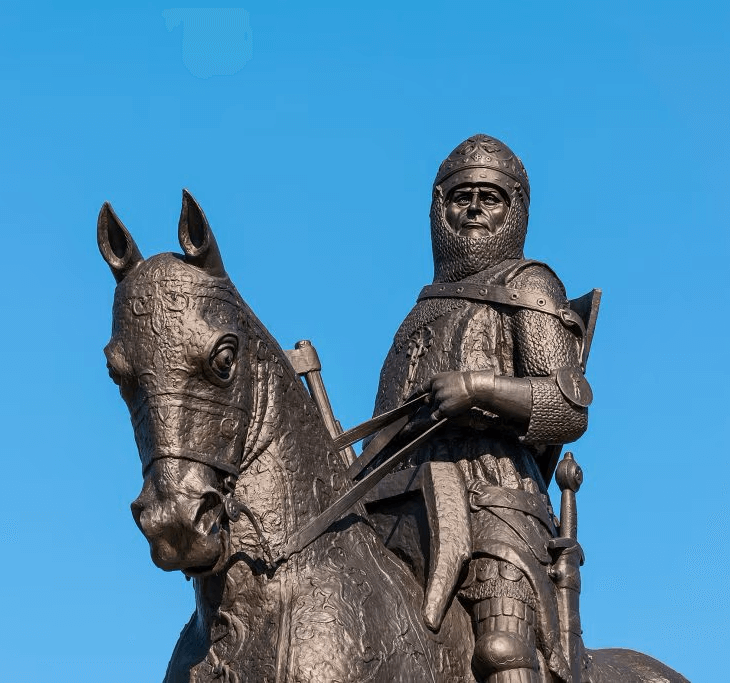
Robert the Bruce: Statue Bannockburn
In the years following Bruce’s ascension, Gilbert MacLellan of Galloway rose through the royal ranks — not by favour, but by merit, serving as clerk to the King, then Archdeacon of Galloway, and eventually Bishop of Sodor and Mann. The MacLellans were not merely soldiers — they were statesmen, courtiers, strategists. They saw the sword and the scroll as equal weapons in the war for sovereignty.
This was the strength of Clan MacLellan in the time of Bruce: not bound to blind loyalty, but guided by a higher allegiance — to Scotland herself. They fought when needed, served when called, and stood when others bent the knee.
Their evolution from Wallace’s companions to Bruce’s confidants speaks not of opportunism, but of resilience — the kind that keeps a clan alive not just through war, but through the centuries that follow.
In the end, Bruce may have worn the crown — but it was men like the MacLellans who made the reign possible. Men who never forgot the cost of loyalty, or the value of a free land.
The Wallace Connection & Legacy of Defiance
When Scotland bled under English chains, and kings bent the knee or broke their word, the MacLellans of Bombie stood not for compromise — but for resistance. Among them, a branch bound by blood and principle walked beside none other than William Wallace, not as subjects, but as equals in defiance.
In the shadow of the devastating defeat at Falkirk in 1298, when many fled or fell silent, MacLellan of Bombie did not abandon the cause. He followed Wallace across the sea, into the courts of foreign kings — specifically to France, to seek aid from King Philip IV, and to rally support for a broken but unbowed Scotland. These were not gestures of diplomacy; they were acts of desperation and determination, carried out by men who refused to let their nation die in silence.
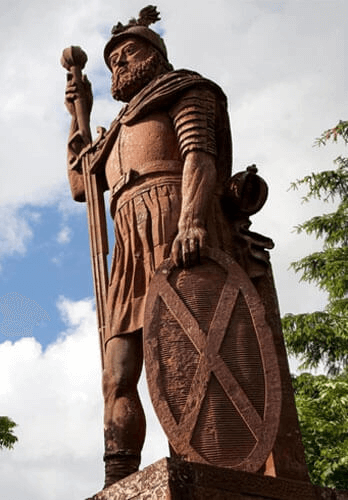
William Wallace
This wasn’t about personal gain or crowned reward — it was about preserving sovereignty, no matter how distant the hope.
The MacLellans didn’t wait for history to crown a victor — they helped forge the path that allowed Scotland to keep its name.
And when Wallace was gone, and the tide turned toward Robert the Bruce, the MacLellans once again answered the call — not out of convenience, but conviction. They understood the stakes. They had already wagered their names, their lands, their blood.
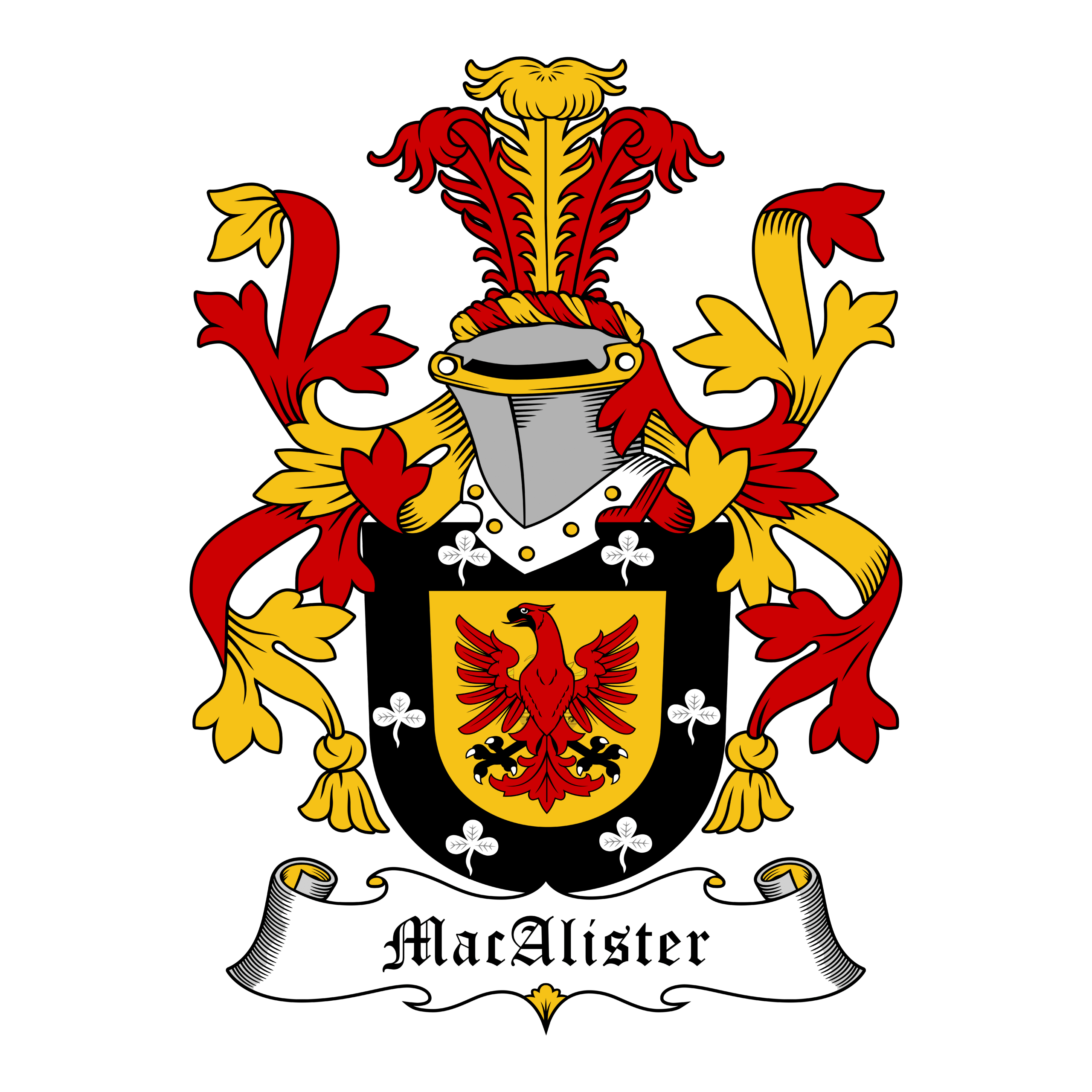
Switching sides was not betrayal — it was strategic survival in service of the same cause: Scottish independence. As was also the case, with Highland Clan’s such as; Clan MacAlister. Scottish politics was a minefield!
This is what defines the MacLellan legacy — not blind loyalty to man or monarch, but a ruthless, adaptive loyalty to the idea of a free Scotland. From the defiant halls of Bombie to the windswept courts of France, their presence was not ornamental. It was essential.
Some clans ruled by title.
The MacLellans earned theirs through action.
In a nation shaped by rebellion and rebirth, the MacLellans were never content to stand at the edge. They rode in the centre of history, sword-drawn, unafraid to follow the fire into exile if that’s what freedom demanded.
And Scotland remembers us not because we claimed victory —
Because We Never Surrendered.
Clan MacLellan & The Honour of Knighthood
Knighthood in medieval Scotland was not granted for birth alone — it was earned through loyalty, battle, and sacrifice. The MacLellans of Galloway rose through these ranks not as distant nobles, but as active defenders of the realm, fighting in pivotal wars and standing alongside kings.
The most renowned knight of the clan was Sir William MacLellan of Bombie, who embodied the raw spirit of Lowland chivalry. A man forged by personal tragedy and clan duty, he was knighted by King James IV – for his unwavering service to the Crown and valour in battle.
His most famed moment came not on the battlefield, but in the court of justice and revenge, when he delivered a bandit’s severed head to the king — an act of personal justice that defined the MacLellan crest and earned his family enduring honour.
Sir William would later meet his end at the Battle of Flodden in 1513, one of the darkest days in Scottish military history.
He died fighting beside the king himself, not from the safety of nobility, but from the front line — where true loyalty bleeds.
But knighthood for the MacLellans was not just forged in swordplay. It extended into diplomacy, administration, and ecclesiastical power. Gilbert MacLellan, who served Robert the Bruce as a royal clerk, eventually rose to Bishop of Sodor and Mann. His position within the Crown’s church apparatus was a different form of knighthood — one of pen over blade — but no less vital to Scotland’s sovereignty.
The MacLellans were also hereditary Sheriffs of Galloway, acting as the Crown’s direct enforcers in one of Scotland’s most volatile regions.
The office brought military command, legal authority, and political clout — all underpinned by the code of noble service.
Legacy Within the Chivalric Tradition
To be a MacLellan knight was to carry dual burdens — that of honour, and that of memory. Their knighthood wasn’t just earned on royal whim — it was forged through personal tragedy, familial vengeance, and fierce loyalty to Scotland.
Where others paraded lineage, the MacLellans displayed action.
Even after their estates dwindled and the title of Lord Kirkcudbright fell dormant in the 19th century, the legacy of MacLellan knighthood remains carved in stone — in the ruins of castles, in the pages of royal charters, and in the crest that still bears the head and the blade.
“Think On” wasn’t a motto — it was a warning. A challenge. A truth.
The MacLellan knight did not fight for ceremony. He fought for country, family, and something no title could bestow — honour earned in full.
Castles and Legacy
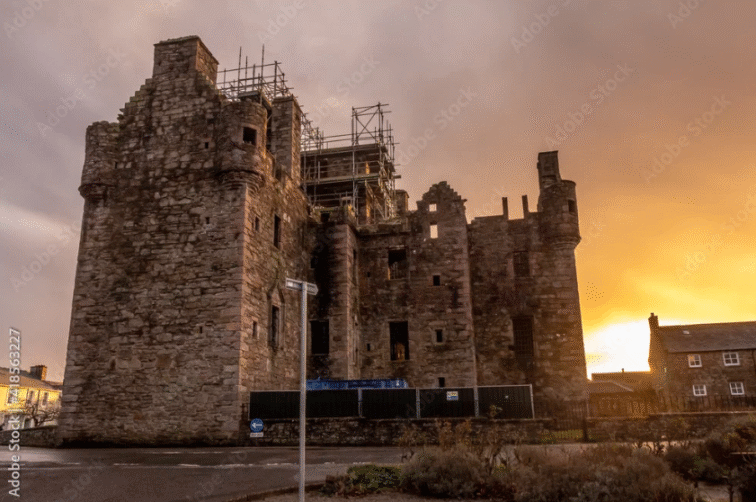
MacLellan’s Castle: Kirkcudbright, Scotland
Stone speaks — and though weathered by time, the fortresses of Clan MacLellan still whisper the legacy of a house that once held sway over Scotland’s western marches.
At the heart of it all stood MacLellan’s Castle, rising proudly from the town of Kirkcudbright — not as some distant relic, but as a monument to status won through blood, allegiance, and survival. Built in the late 16th century, its walls bore witness not to idle luxury, but to the calculated rise of a family who turned vengeance into legacy. Constructed from grey stone and grit, it reflected the MacLellan creed: unornamented, unyielding, unforgettable.
But before Kirkcudbright, there was Raeberry Castle, perched like a sentinel above the wind-lashed coast of the Solway Firth. Though now reduced to scattered ruins and buried memory, Raeberry once held strategic power over sea and shore — a stronghold of the clan’s earlier centuries, where defense was life and loyalty was tested with every tide.
It watched the waters not for beauty, but for danger — a reflection of Galloway’s lawless edge, where the MacLellans carved their name not into books, but into stone.
These castles were not mere homes — they were statements of defiance. They stood in a landscape shaped by betrayal and border feuds, by royal ambition and local rule.
They were built not because the MacLellans were born into power, but because they fought their way into it — and left the stone behind as proof.
Yet time, as it always does, turned iron to rust and power to parchment. Today, Clan MacLellan is armigerous — without a recognised chief, its title dormant, but not defeated. The halls may echo empty, but the legacy lives in every name carved in kirk and cairn, every stone still standing beneath the weight of Scottish rain.
To be a MacLellan today is not to inherit land — it is to inherit memory, resilience, and blood unbent. The castles may crumble, but the spirit endures. It always has.
Clan McLellan / MacLellan – Coat of Arms & Crest
To wear the name MacLellan is to carry not just a lineage, but a warning — sharp as a blade and twice as enduring. The clan motto, “Think On,” is no idle phrase. It is a legacy born of betrayal, vengeance, and truth spoken at sword-point.
Clan MacLellan, a proud Lowland house of Galloway, takes its name from the Gaelic MacGille Fhaolain — “son of the servant of St Filan,” a missionary of the Celtic Church whose legacy ran deep in Scotland’s early soul. The name echoes ancient strength — faelchu, “wolf,” — a symbol of independence, loyalty, and danger when crossed. It suited the MacLellans well.
Their name first surfaces in record by 1217, but by the time of the Anglo-Scottish Wars, the MacLellans were not merely present — they were making history. Fiercely loyal to William Wallace, they resisted English domination at every turn. Their blades did not waver when Scotland called.
But it is in the 15th century that the clan’s defining moment was forged in fire.
Sir Patrick MacLellan, Sheriff of Galloway, stood against the rebellion of the overreaching William Douglas, 8th Earl of Douglas. For that loyalty to the Crown, he was betrayed — captured and murdered at Threave Castle in 1452. The killing was not justice. It was a message.
But the MacLellans did not deal in silence.
William MacLellan of Bombie, Sir Patrick’s son, rose in the wake of that treachery. When a feared bandit plagued the region, it was William who tracked and killed him — but it wasn’t the death that made legend. It was what came after.
With the bandit’s head impaled upon his sword, William marched before King James II and laid it at his feet. The act was bold — but it was his words that became immortal.
“Think on.”
Was it a reminder of loyalty? A demand for justice? Or a veiled rebuke to a king who failed to protect those who served him? No matter the meaning — the message endured.
The king, struck by the courage and conviction of this Lowland knight, permitted the MacLellans to bear the now-infamous clan crest:
A Moor’s head pierced on a dagger point — symbol of justice, vengeance, and unforgotten honour.
Why It Matters
The MacLellan crest isn’t a decoration — it’s a declaration. A Moor’s head impaled on a dagger doesn’t whisper lineage — it shouts legacy. It breaks every rule of polite heraldry, where lions roar in gold and unicorns leap in pageantry. The MacLellans chose none of that. They chose a symbol – bathed in blood and soaked with truth.
This is the visual language of the frontier — not a noble fantasy, but the raw emblem of a clan forged by treachery, hardened by vengeance, and elevated by action.
Where others embroidered history, the McLellans – etched it in steel.
To bear this crest is to carry a burden and a badge — a story of loyalty unrewarded, of justice taken by hand when the law failed. It reflects the unvarnished truth of 15th-century Galloway, a region ruled not by kings, but by boldness and blade. Here, loyalty could cost you your life — but cowardice could cost you your name.
The crest is not for vanity. It’s a warning:
“We remember. We avenge. We endure.”
And in a world that forgets too easily, that alone makes it sacred.
Born of Scotland, Bound by Blood
We are not a relic of the past — we are proof that history breathes. We never died out — some forgot, some never knew. But the blood remembers. The spirit endures. In a world that trades legacy for convenience, stand for something older than clubs, groups and social media shite — stand for YOU – your lineage.
Lineage is not a hobby. It’s heritage wrapped into history, carved in flesh and fire. They tried to silence Clan McLellan, divide us, dilute us — but history doesn’t forget blood. And neither should you. You are not starting a journey — you are continuing one. There is no new soul — only returning ones. Now is the time to remember your roots. Pride of Scotland. Pride of Clan. Our spirit has never left.